Types of aroma diffusers: how to choose the right one
Article · · 5 min read
Compare water-based, waterless, heat and reed diffusers, with practical advice on room size, scent intensity and everyday care.
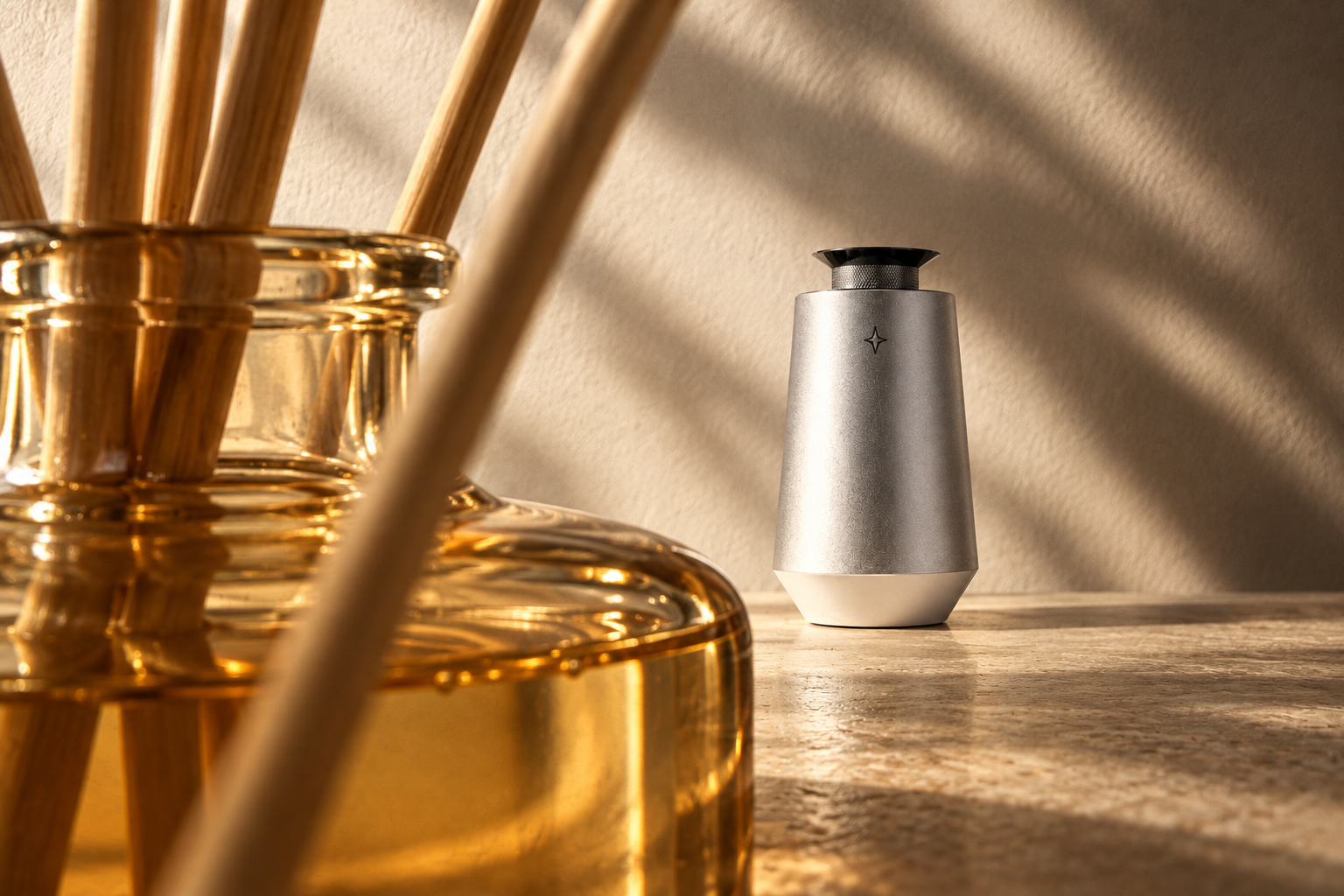
Diffusers vary in how they release fragrance, the spaces they suit and the control they give you over scent intensity. Start with where you want to use one and how you want to run it. Its shape can come later.
This guide covers the main types and the practical differences to consider for your home, office or a smaller space.
What are the main types of aroma diffusers?
Common types include:
- Water-based electric diffusers.
- Waterless electric diffusers, including cold-air models.
- Heat diffusers.
- Reed diffusers.
Cold-air diffusion is a waterless method, so those two categories overlap. Each method has its own filling routine and degree of control over the scent.
Water-based electric diffusers
These devices use water with an oil or fragrance suitable for the model, then release a fine scented mist.
What they offer
- A way to scent a room during everyday use at home.
- Gradual release of fragrance while the device runs.
- A choice of sizes and designs.
- Timer settings on some models.
What to consider
You will need to refill and clean the water tank regularly. Use only the type and amount of oil or fragrance recommended by the manufacturer.
Waterless electric diffusers
Waterless devices diffuse fragrance without a water tank to fill before use. You still need to refill the fragrance and clean the parts specified in the instructions.
The mechanism differs between models. Our guide to how electric diffusers work and whether they need water explains the difference.
Cold-air diffusers
Cold-air diffusion is one method used by waterless diffusers. It disperses fragrance without adding water or using heat.
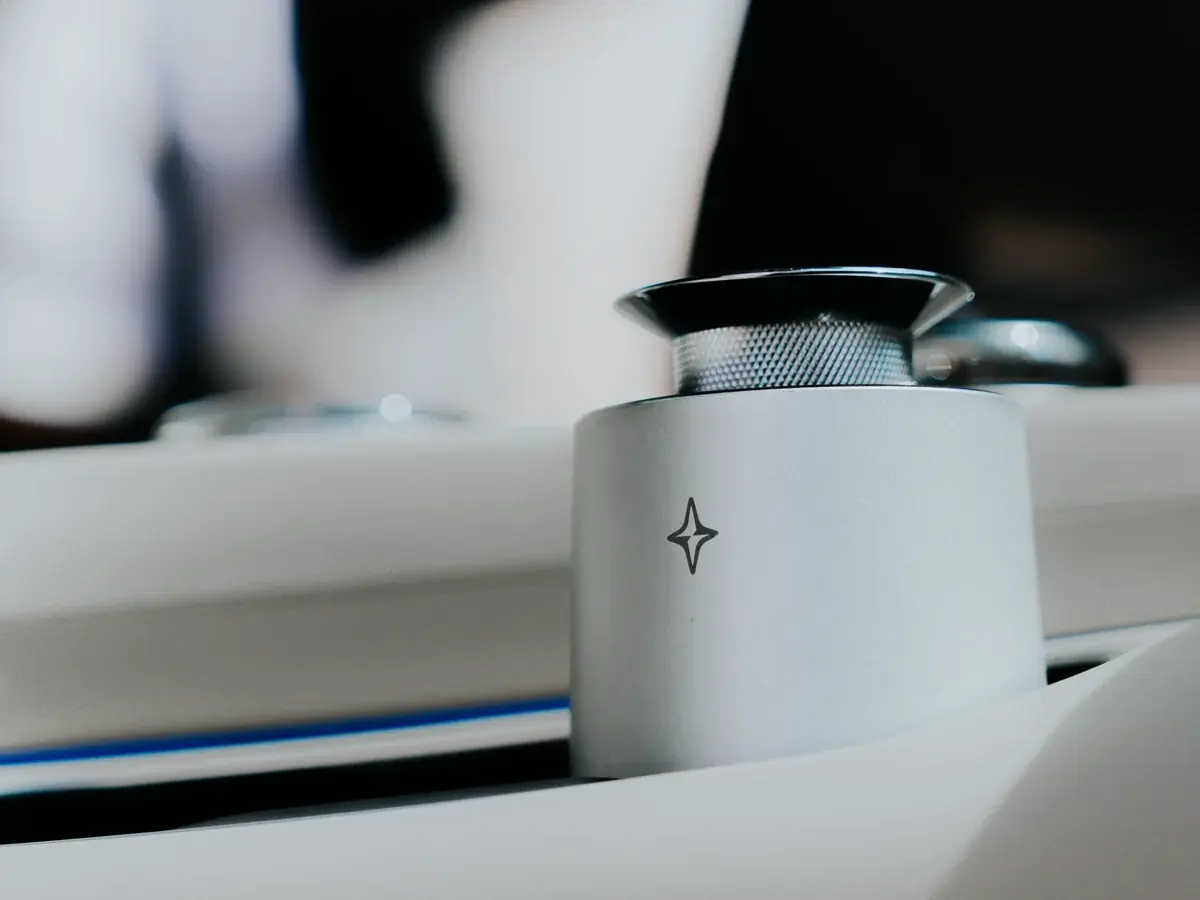
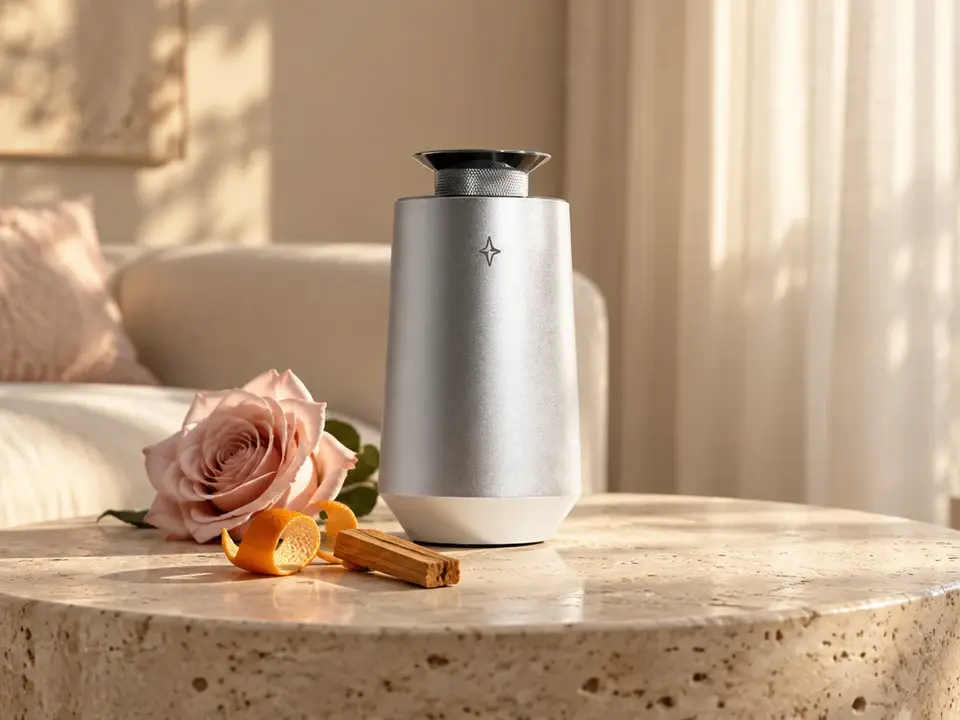
Celestial's Vessel 01 diffuser uses this method and is designed for the home, car, office and small indoor spaces.
What cold-air diffusers offer
- No water tank to fill.
- Fragrance diffusion without heating.
- Scent released into the surrounding space.
- Direct use of a compatible fragrance.
- Use in different settings, depending on the model's specifications.
Heat diffusers
Heat diffusers warm an oil or fragrance to help it evaporate into the air.
What they offer
- A simple way to release fragrance.
- A range of decorative shapes and materials.
What to consider
Follow the instructions for the particular device and fragrance. Its use of heat makes the operating routine different from a diffuser that works without it.
Reed diffusers
Reeds absorb liquid fragrance from a bottle and gradually release its scent into the air. They work without electricity.
They can suit a space where you want a steady background scent without switching on a device. They do not provide the same timer or intensity settings as some electric diffusers.
Which type is best for a home?
That depends on the room and how you prefer to use fragrance.
A reed diffuser may suit you if you want scent without an electric device to operate.
A water-based model may suit you if you are comfortable filling and cleaning a tank and want to use oils or fragrances made for that system.
A cold-air diffuser may suit you if you prefer to use fragrance directly, without water or heat.
Use the room and placement checklist below to narrow down your choice.
How to choose a diffuser for your space
Check these details before choosing a device:
1. Room size
Compare the model's stated coverage with the space you want to scent. A device made for a small room may not give the same result in a large, open area.
2. Diffusion method
Decide whether you want to use water or a waterless method such as cold-air diffusion.
3. Scent intensity
Adjustable intensity is useful if you move the device between rooms or want a lighter scent at certain times.
4. Running time
A timer or a choice of operating modes lets you set the device around the time you spend in the room.
5. Cleaning and care
Read the care instructions before buying. Check which parts need cleaning and which fragrances the device accepts.
Which type suits each space?
Bedroom: Look for control over scent intensity so you can keep it at a level you find comfortable.
Living room or reception room: Match the device's stated coverage to the room size and choose a position that allows fragrance to spread.
Office: A small portable diffuser can be practical for a compact workspace. Keep the scent at a level that suits the people sharing it.
Car: Choose a device specifically designed for car use, with a suitable size and operating mode.
Water-based or waterless?
Think about the routine you prefer.
A water-based device needs its tank filled and cleaned. A waterless device removes the water-filling step, but its fragrance bottle and diffuser parts still need care.
Cold-air models use fragrance directly without heating it. They may suit you if you want to avoid preparing a water tank.
Getting the most from your diffuser
Placement, room size and intensity settings all affect how the scent spreads.
Start at a low setting and increase it if needed. Keep the diffuser in a position where furniture does not block the fragrance outlet.
Read our guide to using an aroma diffuser for setup, placement and cleaning advice.
Choosing your diffuser
Water-based, waterless, heat and reed diffusers each involve a different routine. Cold-air diffusion sits within the waterless category.
Start with the size of the space, then decide how much control you want over scent intensity and running time.
You can explore Celestial's diffusers and home fragrances if you are looking for a cold-air device and compatible scents.